PROGRAMME PROFILE
At a glance
- Organiser
- Stanford Pre-Collegiate Studies
- Destination
- United States
- Format & duration
- Online · 2 weeks
- Age / stage
- Grade 8–11
- Type
- Academic courses
- Information year
- 2027
Sources checked: 2026-11-10 · Facts and editorial guidance are labelled separately
Learning and approach
- Live small-group discussion
- Sustained focus on one subject
- Synchronous classes plus independent assignments
Academic content in depth
Summer Institutes concentrates on one online course over two weeks for students currently in grades 8–11. Options span mathematics, computing, sciences, humanities and writing, but prerequisites and tasks differ by course. Compare the questions, methods and expected background rather than treating every Stanford-branded course as interchangeable.
Classes, assignments and workload
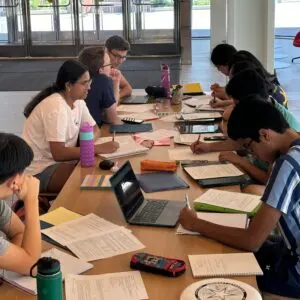
Teaching takes place live online and includes independent work. The programme is non-credit and ungraded, with completion documentation for those meeting the requirements. The short format still calls for consistent attendance, participation and assignments. Studying from home should not be confused with unrestricted access to recordings or flexible attendance.
Eligibility and international applicants
For grades 8–11, with daily live online attendance and assignments. Course prerequisites and scheduled meeting times must be checked individually.
Dates and costs
Schedule
2027: June 14–25 or July 12–23. Applications are expected to open in early December 2026.
Costs
Current full costs require verification. Check tuition, accommodation, meals, insurance and travel inclusions.
Fit and preparation
Useful for students seeking academic engagement without travel. Convert meeting times to your local time before assessing whether consistent attendance is realistic.
Application preparation
Create a shortlist of two or three genuinely interesting subjects. Coding applicants can practise explaining a working project; humanities students can prepare reading notes and arguments; science students can review relevant school concepts. These are preparation suggestions, not universal portfolio requirements. Follow the current application instructions for actual submissions and English requirements.
Choosing well and reflecting on outcomes
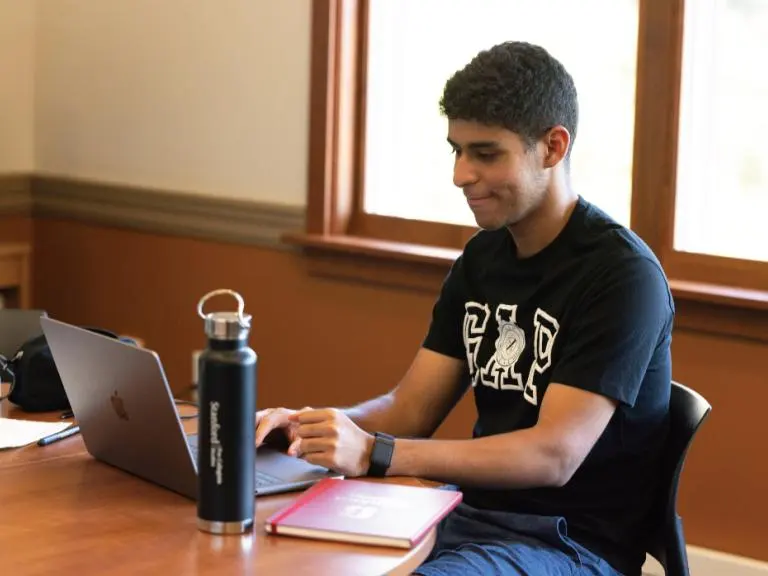
This format can suit younger secondary students exploring a subject without overseas travel. Families still need to consider internet access, a quiet workspace, on-camera participation and time-zone demands. Afterwards, summarise the questions studied, assignments completed, challenges and next steps rather than keeping only the certificate.
Frequently asked questions
Can younger secondary students participate?
The current programme serves grades 8–11 or equivalent, subject to course prerequisites and the annual application rules.
Does a two-week course mean a light workload?
Not necessarily. Live classes and independent tasks are concentrated into a short period; assess the actual course schedule.
Is it the same as SUMaC or Summer Session?
No. The three programmes differ in subject focus, school stage, duration, format and credit arrangements.
Official sources and verification
- Official source 1 ↗summerinstitutes.spcs.stanford.edu
- Official source 2 ↗summerinstitutes.spcs.stanford.edu
Check the relevant official edition for fees, eligibility and sessions. Images primarily use official programme or university material, with other sources credited separately. They illustrate programme or campus context, not a specific current-year class.