PROGRAMME PROFILE
At a glance
- Organiser
- Yale University
- Destination
- United States
- Format & duration
- On campus · 2 weeks
- Age / stage
- 16–18
- Type
- Research & selective
- Information year
- 2027
Sources checked: 2026-11-10 · Facts and editorial guidance are labelled separately
Learning and approach
- Innovations in Science & Technology
- Politics of Law & Economics
- Solving Global Challenges
Academic content in depth
YYGS focuses on interdisciplinary exploration rather than completing a university major early. IST connects science and technology, PLE links politics, law and economics, and SGC examines global challenges. The published curriculum includes discussions following lectures and a collaborative capstone, requiring participants to turn ideas into questions, evidence and explanations.
Classes, assignments and workload
YYGS awards neither grades nor course credit; participants receive an electronic completion certificate. Lectures, smaller seminars and residential peer interaction create different learning settings. The experience is best understood as exploration, communication and collaboration, not as a promised research publication or a credit-bearing university course.
Eligibility and international applicants
For 2027: age 16–18 by July 18; a current sophomore or junior, or equivalent; Northern Hemisphere graduation in 2028 or 2029. First-time participants must be ready for an intensive English-language curriculum.
Dates and costs
Schedule
2027: June 20–July 2; July 4–16; July 18–30.
Costs
Current full costs require verification. Check tuition, accommodation, meals, insurance and travel inclusions.
Fit and preparation
Consider it if you enjoy discussion across subjects. Prepare by examining a question you care about and explaining both the evidence and its limitations.
Application preparation
Choose a question you have followed over time and explain why it matters, what you have read and how your thinking has changed. Specific examples of inquiry and discussion are more useful than a list of activities. Check the 2027 graduation-year, age-reference and first-time-attendance rules before organising the documents and responses requested by the application.
Choosing well and reflecting on outcomes
YYGS may suit a student who wants to explore several fields and engage with competing perspectives. A student seeking a specific laboratory technique, academic credit or individual research should compare other formats. Afterwards, record your contribution to the capstone, the evidence used and how your thinking developed rather than relying on the certificate alone.
Frequently asked questions
Is YYGS a research programme?
Here it belongs to the selective-programme side of the broader research/selective category. Its interdisciplinary learning and collaboration are not equivalent to a laboratory research placement.
Does it award Yale course credit?
No. The official academic description specifies no grades or course credit, with an electronic certificate for completion.
How should I choose a track?
List the questions you want to investigate, then compare the relevant academic approaches. Do not choose on an assumed admission advantage; this directory has no official comparative admission probabilities.
Official sources and verification
- Official source 1 ↗globalscholars.yale.edu
- Official source 2 ↗globalscholars.yale.edu
- Official source 3 ↗globalscholars.yale.edu
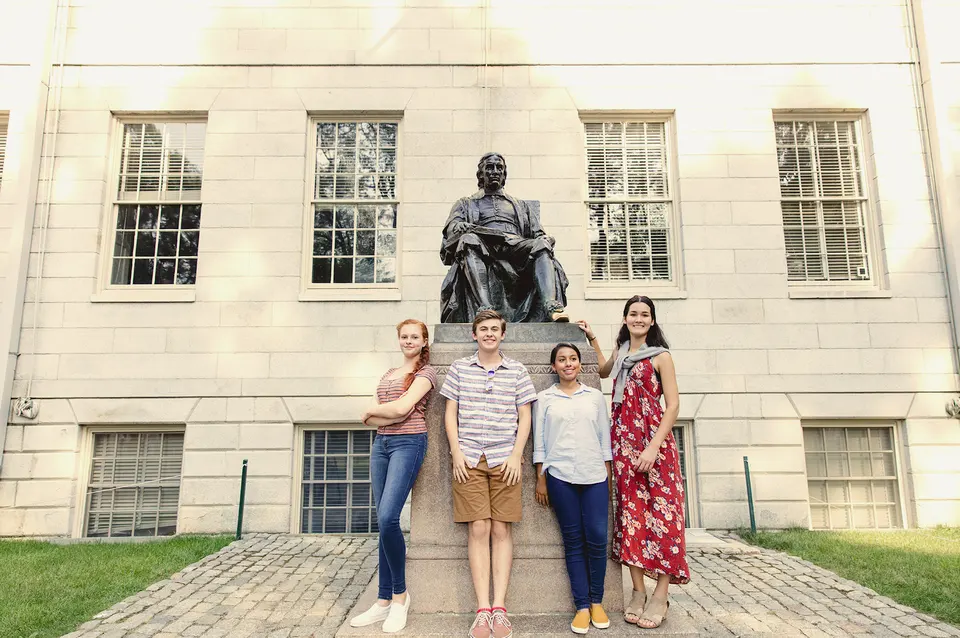
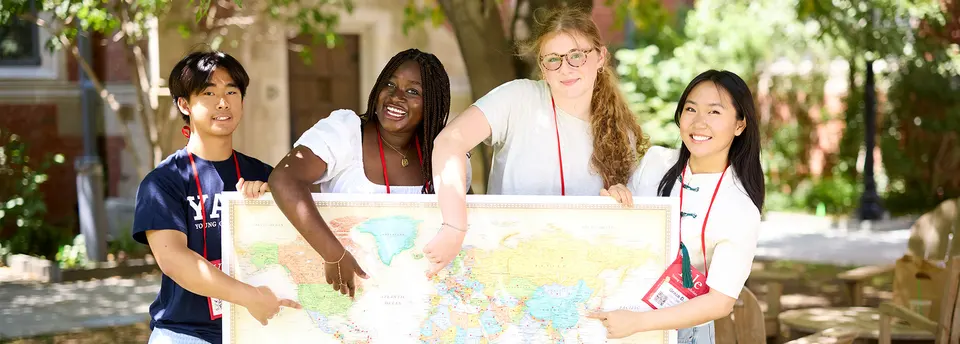
Check the relevant official edition for fees, eligibility and sessions. Images primarily use official programme or university material, with other sources credited separately. They illustrate programme or campus context, not a specific current-year class.